Sunday, January 11, 2009

At the Zoo


At the Zoo


This photo released by the Lincoln Children's Zoo, shows Milla, a Matschie's tree kangaroo, on Tuesday, Jan. 6, 2009 in Lincoln, Neb. The Lincoln Children's Zoo is celebrating its first set of Matschie's tree kangaroo twins and an official who tracks numbers of the extremely rare species says it's the first documented case in North America among records that go back to the 1970s. The twins born last month to Milla and her mate Noru, brought in from the Toronto Zoo, make up half of the four documented Matschie's tree kangaroo births in 2008. The twins are in her pouch.
(AP Photo/ Lincoln Children's Zoo)


Flamingos are counted during the annual animal count at London Zoo in London, Thursday, Jan. 8, 2009. A complete head count of every animal, insect and bird living at the zoo is to take place, with more than 650 different species to tally up.
(AP Photo/Kirsty Wigglesworth)


Female Sumatran Tiger Jumilah licks on a blood infused iceblock as she attempts to cool down at Sydney's Taronga Zoo, Tuesday, Jan. 6, 2009. Animals at Sydney's zoo were given large homemade ice blocks filled with fruit to help stay cool as temperatures were expected to hit 41C (106F). The ambulance service issued a warning for the elderly and children to stay out of the heat and drink plenty of water as as a heatwave hits the state.
(AP Photo/Mark Baker)

Sunday, November 16, 2008


Safety data for tannic acid


Glossary of terms on this data sheet.

The information on this web page is provided to help you to work safely, but it is intended to be an overview of hazards, not a replacement for a full Material Safety Data Sheet (MSDS). MSDS forms can be downloaded from the web sites of many chemical suppliers.


General

    Synonyms: gallotannic acid, gallotannin, glycerite, tannin
    Molecular formula: C76H52O46
    CAS No: 1401-55-4
    EC No: 215-753-2

Physical data

    Appearance: white or light yellow powder
    Melting point: 210 C
    Boiling point:
    Vapour density:
    Vapour pressure:
    Density (g cm-3):
    Flash point: 199 C (closed cup)
    Explosion limits:
    Autoignition temperature:
    Water solubility:

Stability

    Stable. Incompatible with metallic salts, strong oxidizing agents, iron and other heavy metals.

Toxicology

    Not hazardous according to Directive 67/548/EEC.

    Toxicity data
    (The meaning of any abbreviations which appear in this section is given here.)
    ORL-RAT LD50 2260 mg kg-1
    IPR-MUS LD50 120 mg kg-1
    ORL-RBT LD50 5000 mg kg-1

    Risk phrases
    (The meaning of any risk phrases which appear in this section is given here.)

Transport information

    Non-hazardous for air, sea and road freight.

Personal protection

    Minimize contact.

    Safety phrases
    (The meaning of any safety phrases which appear in this section is given here.)

    Source: http://msds.chem.ox.ac.uk/TA/tannic_acid.html

If I Were a Boy

Ang astig ng song na 'to no?

If I were a boy

Even just for a day
I’d roll outta bed in the morning
And throw on what I wanted then go
Drink beer with the guys
And chase after girls
I’d kick it with who I wanted
And I’d never get confronted for it.
Cause they’d stick up for me.

[Chorus]

If I were a boy
I think I could understand
How it feels to love a girl
I swear I’d be a better man.
I’d listen to her
Cause I know how it hurts
When you lose the one you wanted
Cause he’s taken you for granted
And everything you had got destroyed

If I were a boy
I could turn off my phone
Tell everyone it’s broken
So they’d think that I was sleepin’ alone
I’d put myself first
And make the rules as I go
Cause I know that she’d be faithful
Waitin’ for me to come home (to come home)

(Chorus)

It’s a little too late for you to come back
Say its just a mistake
Think I’d forgive you like that
If you thought I would wait for you
You thought wrong

(Chorus)

But you’re just a boy
You don’t understand
Yeah you don’t understand
How it feels to love a girl someday
You wish you were a better man
You don’t listen to her
You don’t care how it hurts
Until you lose the one you wanted
Cause you’ve taken her for granted
And everything you have got destroyed
But you’re just a boy

Thursday, November 6, 2008

Geneva drive


The Geneva drive or Maltese cross is a mechanism that translates a continuous rotation into an intermittent rotary motion. It is an intermittent gear where the drive wheel has a pin that reaches into a slot of the driven wheel and thereby advances it by one step. The drive wheel also has a raised circular blocking disc that locks the driven wheel in position between steps.


Besides the external Geneva drive shown in the diagram above, there is also an internal Geneva drive. The external form is the more common, as it can be built smaller and can withstand higher mechanical stresses. The axis of the drive wheel of the internal Geneva drive can have a bearing only on one side. The angle by which the drive wheel has to rotate to effect one step rotation of the driven wheel is always smaller than 180° in an external Geneva drive and always greater than 180° in an internal one, where the switch time is therefore greater than the time the driven wheel stands still.

Source: http://en.wikipedia.org/wiki/Category:Free_animated_images

Autostereograms

An autostereogram is a single-image stereogram (SIS), designed to create the visual illusion of a three-dimensional (3D) scene from a two-dimensional image in the human brain. In order to perceive 3D shapes in these autostereograms, the brain must overcome the normally automatic coordination between focusing and vergence.


When a series of autostereograms are shown one after another, in the same way moving pictures are shown, the brain perceives an animated autostereogram. If all autostereograms in the animation are produced using the same background pattern, it is often possible to see faint outlines of parts of the moving 3D object in the 2D autostereogram image without wall-eyed viewing; the constantly shifting pixels of the moving object can be clearly distinguished from the static background plane. To eliminate this side effect, animated autostereograms often use shifting background in order to disguise the moving parts.

Source: http://en.wikipedia.org/wiki/Autostereogram

Wednesday, November 5, 2008

Animal Camouflage


Instead of webs, the goldenrod crab spider, Misumena vatia, uses camouflage to ambush its prey, slowly changing color to match the flower on which it’s perched. It does this by moving yellow pigment closer to or farther from its outermost layer of cells. The species is most often found among yellow and white blooms, but it can morph into a green or bluish hue when necessary, or even take on reddish spots or stripes. Thus disguised, the arachnid waits frozen, its front legs poised to snap closed in a deadly embrace on hapless insects that come into range. The spider’s venomous bite can take down bugs as large as butterflies and bumblebees.


Here, a speckled sanddab nestles into the ocean floor, its skin mottled to mimic the pebbly background. A member of the flounder family, Citharichthys stigmaeus can change its topside appearance with cells called chromatophores. Pigment granules in these cells migrate closer to the cell surface to create patterns on its brown skin. This camouflage hides the fish from predators off the Pacific coast where it’s found and enables it to surprise its prey—smaller bony fishes, shrimp and worms.


Its unique black-and-white coloring helps the many-spotted tiger moth both stand out and blend in. Native to the western U.S., this moth may feed on mildly toxic plants like milkweed, taking the plant poisons into its own body as a natural defense against predators. Most often, the species’ white body advertises “I taste bad” to birds who spot it flying in the air, says biologist Rebecca Simmons of the University of North Dakota. But when it comes to rest against a dappled background, like the one pictured here, Hypercompe permaculata’s coloring also breaks up the outline of its body, allowing it to blend in and hide from birds that might not heed its white warning.


The round object in the center-right of this photo is no rock—it’s a rock ptarmigan hiding motionless among the stones and moss of the Alaskan tundra. (Look for its beak to spot its head.) In the winter snow, Lagopus muta exchanges its brown feathers for white, maintaining year-round protection from its main predator, the gyrfalcon. In the spring, males retain their white feathers after the snow disappears, advertising themselves to potential mates. Once they’ve mated, and before the brown feathers grow back, males roll around in the dirt, creating a makeshift camouflage, which is eventually replaced by a summer disguise like the one on the female shown here.


Huddled together against a rocky Canadian cliff face, a typical nesting site, these two gyrfalcon chicks blend into the marbled stone. Adult Falco rusticolus patrol the air in arctic regions, feeding on their tundra neighbors, the well-hidden ptarmigan and other smaller birds. Gyrfalcons are clad in inconspicuous gray, white and brown feathers, with a light underside.


Known for its distinctive high-pitched call, the spring peeper frog’s coloring ranges from grayish to reddish brown, a fitting adaptation to the leaves and dead grass of its wooded habitat in the eastern and midwestern United States. Darker markings, including the cross on its back, help break up Pseudacris crucifer’s silhouette against its surroundings. To add to the illusion, the tiny frog can also adjust its hue slightly within the gray-brown range to better match its environment.

Source: http://www.popsci.com/scitech/gallery/2008-11/hiding-plain-sight


Masarap ang candy...

Monday, November 3, 2008

Quote


A quote for all of you...

Sunday, November 2, 2008

Majesty in Gothic Architecture


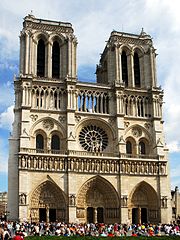
The facade of a large church or cathedral, often referred to as the West Front, is generally designed to create a powerful impression on the approaching worshipper, demonstrating both the might of God, and the might of the institution that it represents. One of the best known and most typical of such facades is that of Notre Dame de Paris.

Central to the facade is the main portal, often flanked by additional doors. In the arch of the door, the tympanum, is often a significant piece of sculpture, most frequently Christ in Majesty and Judgment Day. If there is a central door jamb or a tremeu, then it frequently bears a statue of the Madonna and Child. There may be much other carving, often of figures in niches set into the mouldings around the portals, or in sculptural screens extending across the facade.

In the centre of the middle level of the facade, there is a large window, which in countries other than England and Belgium, is generally a rose window like that at Reims Cathedral. The gable above this is usually richly decorated with arcading or sculpture, or in the case of Italy, may be decorated, with the rest of the facade, with polychrome marble and mosaic, as at Orvieto Cathedral

The West Front of a French cathedral and many English, Spanish and German cathedrals generally has two towers, which, particularly in France, express an enormous diversity of form and decoration.[7][8] However, some German cathedrals have only one tower located in the middle of the facade (such as Freiburg Münster).

Source: http://en.wikipedia.org/wiki/Gothic_architecture

Thursday, October 30, 2008

Happy Tree Friends


Ang saya saya talaga nila...

Happy Tree Friends (Often abbreviated as HTF) is a Flash cartoon series by Mondo Mini Shows, created by Rhode Montijo, Kenn Navarro, Warren Graff and Aubrey Ankrum. Since its debut the show has become a popular internet phenomenon and has won a cult following.


As indicated on the official site, it is "not recommended for small children". Notwithstanding the somewhat childish shape of the series and the cute appearance of its characters, the show is extremely violent, with nearly every episode featuring blood, gore, and extremely painful, bloody gruesome deaths. Hehehe...

source: http://en.wikipedia.org/wiki/Happy_Tree_Friends

Enzyme


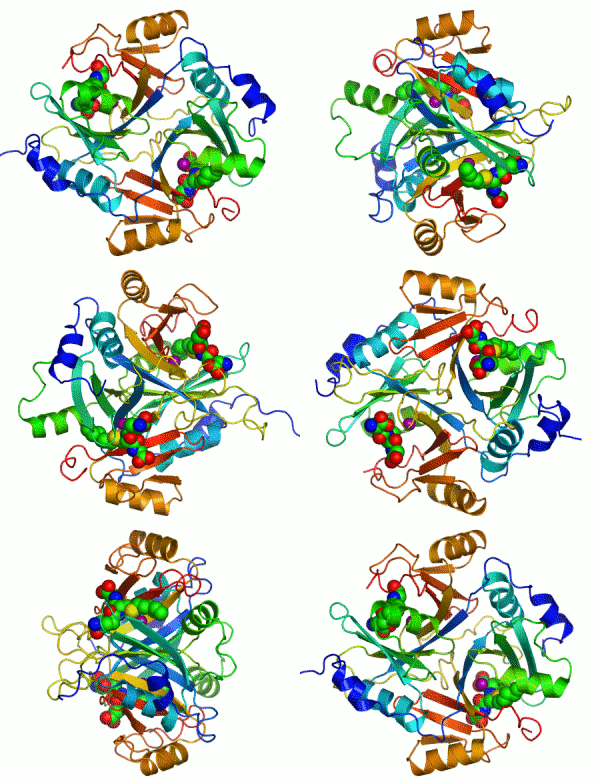
Human glyoxalase I. Two zinc ions that are needed for the enzyme to catalyze its reaction are shown as purple spheres, and an enzyme inhibitor called S-hexylglutathione is shown as a space-filling model, filling the two active sites.

Enzymes are biomolecules that catalyze (i.e. increase the rates of) chemical reactions.[1][2] Almost all enzymes are proteins. In enzymatic reactions, the molecules at the beginning of the process are called substrates, and the enzyme converts them into different molecules, the products. Almost all processes in a biological cell need enzymes to occur at significant rates. Since enzymes are selective for their substrates and speed up only a few reactions from among many possibilities, the set of enzymes made in a cell determines which metabolic pathways occur in that cell.

Source: http://en.wikipedia.org/wiki/Enzymes#Cofactors_and_coenzymes

Castles


Belfast Castle


Johnstown Castle

Castle definition:
Originally, a castle was a fortress built to protect strategic locations from enemy attack or to serve as a military base for invading armies. The earliest castles in Europe were constructed of earthwork and timber. Dating as far back as the 9th century, these early structures were often built over ancient Roman foundations. Over the next three centuries, wooden forts evolved into imposing stone walls with narrow windows and high parapets. By the 13th century, lofty stone towers were popping up across Europe. People seeking protection from invading armies built villages around established castles. Local nobility took the safest residences for themselves -- inside the castle walls. Castles became homes, and also served as important political centers. As Europe moved into the Renaissance, the role of castles became divided. Some were used as military fortresses, and were controlled by a monarch. Others were unfortified palaces, mansions, or manor homes and served no military function. Although Europe and Great Britain are famous for their castles, imposing fortresses and grand palaces have played an important role in most countries around the world. Japan is home to many impressive castles. Even the United States claims hundreds of modern "castles" built by wealthy businessmen. Also Known As: A castle built as a military stronghold may be called a fort, fortress, stronghold, or stronghouse. A castle built as a home for nobility is a palace. In France, a castle built for nobility may be called a chateau(the plural is chateaux).

Wednesday, October 29, 2008

Flying Buttresses


In order to prevent the outward collapse of the arches, Gothic architects began using a revolutionary "flying buttress" system. Freestanding brick or stone supports were attached to the exterior walls by an arch or a half-arch.

In this view of the Sainte-Chapelle in Riom, France, you can see the broad masonry buttresses extending from the stone pillars to the main wall of the cathedral. The Sainte-Chapelle in Riom is modeled after Louis IX's palace chapel in Paris.

Sorry talaga, wala na akong mailagay...
Source: http://architecture.about.com/od/earlychristianmedieval/ss/gothic_5.htm

Crush


Crush
by David Archuleta
:

I hung up the phone tonight
Something happened for the first time deep inside
It was a rush, what a rush

'Cause the possibility
That you would ever feel the same way about me
It's just too much, just too much

Why do I keep running from the truth?
All I ever think about is you
You got me hypnotized, so mesmerized
And I've just got to know

Chorus:

Do you ever think when you're all alone
All that we can be, where this thing can go?
Am I crazy or falling in love?
Is it real or just another crush?
Do you catch a breath when I look at you?
Are you holding back like the way I do?
'Cause I'm trying and trying to walk away
But I know this crush ain't goin' away-ay-ay-ay-ayy
Goin' away-ay-ay-ay-ayy

Has it ever crossed your mind
When we're hanging, spending time girl, are we just friends?
Is there more, is there more?

See it's a chance we've gotta take
'Cause I believe that we can make this into something that will last
Last forever, forever

Chorus:

Do you ever think when you're all alone
All that we can be, where this thing can go?
Am I crazy or falling in love?
Is it real or just another crush?
Do you catch a breath when I look at you?
Are you holding back like the way I do?
'Cause I'm trying and trying to walk away
But I know this crush ain't goin' away-ay-ay-ay-ayy
Goin' away-ay-ay-ay-ayy

Why do I keep running from the truth?
All I ever think about is you
You got me hypnotized, so mesmerized
And I've just got to know

Chorus:

Do you ever think when you're all alone
All that we can be, where this thing can go?
Am I crazy or falling in love?
Is it real or just another crush?
Do you catch a breath when I look at you?
Are you holding back like the way I do?
'Cause I'm trying and trying to walk away
But I know this crush ain't goin' away-ay-ay-ay-ayy
This crush ain't goin' away-ay-ay-ay-ayy
Goin' away-ay-ay-ay-ayy

Ribbed Vaulting


Earlier Romanesque churches relied on barrel vaulting. Gothic builders introduced the dramatic technique of ribbed vaulting.

While barrel vaulting carried weight on continuous solid walls, ribbed vaulting used columns to support the weight. The ribs also delineated the vaults and gave a sense of unity to the structure.

You can see the ribbed vaulting in the ceiling above this cloister at Royaumont Abbey in Asnières-sur-Oise, France.

Astig!

Source: http://architecture.about.com/od/earlychristianmedieval/ss/gothic_4.htm

Pointed Arches


Ang astig ng picture na ito no? Part kasi siya ng isang Gothic church.

Monday, October 27, 2008

Alnwick castle


According to my sources, ang shooting site ng Harry potter ay ang Alnwick castle, nanakapakita sa mga picture na ito.


Alnwick Castle was built in the mid 12th century, with a circular keep with five semi-circular towers adorned with pinnacles and battlements surrounding the great Castle. When you enter the second and third courts, through massive towers, you reach the inner court, that is the very center of the fortress. It is the second largest inhabited castle in England, second to Windsor Castle. It is the home of the Duke and Duchess of Northumberland whose family, the Percys have lived here since 1309. You may walk its wonderful halls and see such rooms as the Library, the Guard Chambers, the Saloon, the Drawing Room, and the Chapel, to name a few. It was a very large castle with lots to view inside and out.


Movies such as: Harry Potter and the Chamber of Secrets, Harry Potter and the Philosopher's Stone, Elizabeth, Robin Hood Prince of Thieves, and Ivanhoe are a few of the films filmed at Alnwick Castle.


sources: wikipedia.org
and hendede.blogspot.com

Memoirs of a Geisha


Memoirs of a geisha novel information from Wikipedia.org... hehe... ang astig talaga ng picture na 'to...

Friday, October 24, 2008

Hutchison Effect

Kung gusto niyong malaman ang Hutchison effect, isang effect na nakapanghihilakbot nga naman, i-click niyo ang unang Hutchison effect na phrase sa sentence na ito.

Picture


ANg astig nitong picture na ito, no?